

Ambulances are a core component of modern medical emergency response systems, undertaking the crucial task of transporting patients from accident scenes or homes to medical facilities in a timely and efficient manner. They are not only tools for emergency rescue but also provide an environment for first aid treatment. Within this environment, the design of the space, the selection of materials, and their durability are critical to the overall performance of the ambulance.
Performance Requirements for Ambulance Boxes
The design of ambulance boxes must meet several strict performance requirements, including:
- Strength and Impact Resistance: The box must withstand strong vibrations and collisions during high-speed driving and emergency situations.
- Temperature and Insulation: The ambulance may need to regulate temperature, making good insulation crucial to ensure the safety of patients and equipment.
- Corrosion Resistance and Easy Cleaning: Due to frequent use and the unique medical environment, the materials must be resistant to corrosion and easy to clean and disinfect.
- Lightweight and Structural Strength: The ambulance box should be as lightweight as possible to optimize vehicle performance, without compromising strength and safety.
- Antibacterial and Hygiene Properties: The materials should have antimicrobial properties to reduce the risk of cross-contamination.
CFRT sheets offer the following advantages
CFRT combines the advantages of thermoplastic resins and high-strength fibers, maintaining lightweight while possessing excellent strength and toughness.
- Lightweight: CFRT materials are lighter than metals and thermoset FRP, helping to improve the efficiency of the ambulance.
- High Strength and Impact Resistance: Continuous fiber reinforcement enhances the impact resistance of CFRT sheets, offering better protection for the occupants and equipment inside the vehicle.

Advantages of using CFRT sheets in ambulance boxes
CFRT (continuous fiber reinforced thermoplastic) sheets are used as the inner and outer skin of ambulance bodies. Combined with insulating foam (XPS or PU), they form composite panels used as wall panels, partitions, door panels, or ceiling panels. This represents an innovative shift in the application of composite materials.
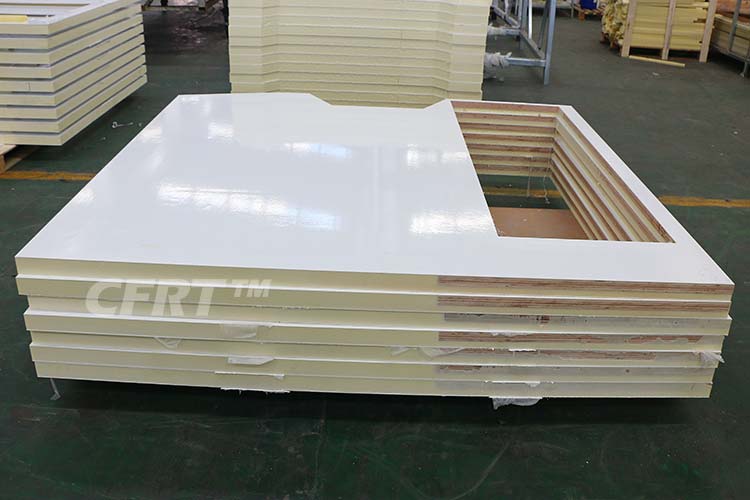
CFRT vs Aluminum vs FRP
| Material | Advantages | Disadvantages |
|---|---|---|
| Aluminum Sheets | – Lightweight, reduces vehicle weight – Good corrosion resistance – Easy to process | – Lower strength and impact resistance – Performance may be unstable in high-temperature environments – Not suitable for handling large impacts or long-term loads |
| Thermoset FRP Sheets | – High strength, good impact resistance – Excellent corrosion resistance – Smooth surface, easy to clean – Durable in harsh environments | – Thermoset resins limit recyclability and processing flexibility – Relatively heavy – Difficult to reprocess or modify shape |
| CFRT Sheets | – Lightweight, enhances transportation efficiency – Excellent strength and impact resistance – Highly corrosion-resistant, suitable for various environments | – Higher initial cost compared to aluminum sheets – Higher upfront investment cost |